
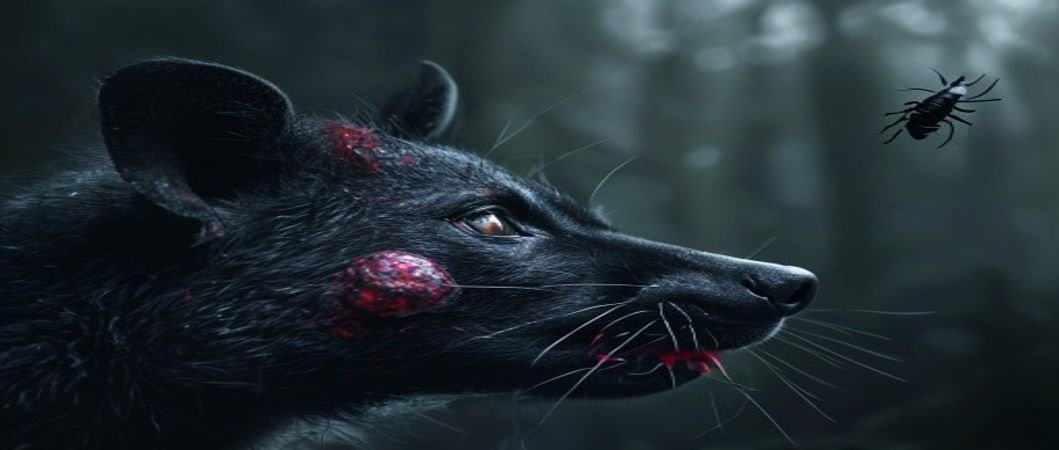
In a groundbreaking study published on 24 July 2026 in the prestigious Journal of Cancer Research, a team of scientists from the National University of Singapore (NUS) shed light on the alarming phenomenon of transmissible cancers. This complex and intriguing topic has been gaining attention worldwide, with the Singaporean research team contributing significantly to the ongoing debate. Transmissible cancers, also known as cancer epidemics, are rare instances where cancer cells are transmitted from one individual to another, often through vectors such as ticks or other insects.
The NUS team, led by renowned scientist Dr. Rachel Tan, has been investigating a particular type of transmissible cancer found in Tasmanian devils, a species native to Australia. The researchers discovered that this cancer, known as devil facial tumor disease (DFTD), is not only contagious between devils but also exhibits remarkable genetic stability, allowing it to spread rapidly within the population. According to Dr. Tan, the findings have significant implications for our understanding of cancer transmission and the development of new treatment strategies.
While transmissible cancers are relatively rare in humans, the Singaporean research team’s discovery highlights the importance of continued investigation into this fascinating and unsettling topic. As the scientific community continues to unravel the mysteries of cancer transmission, the world holds its breath, eager to uncover the next breakthrough in cancer research.