
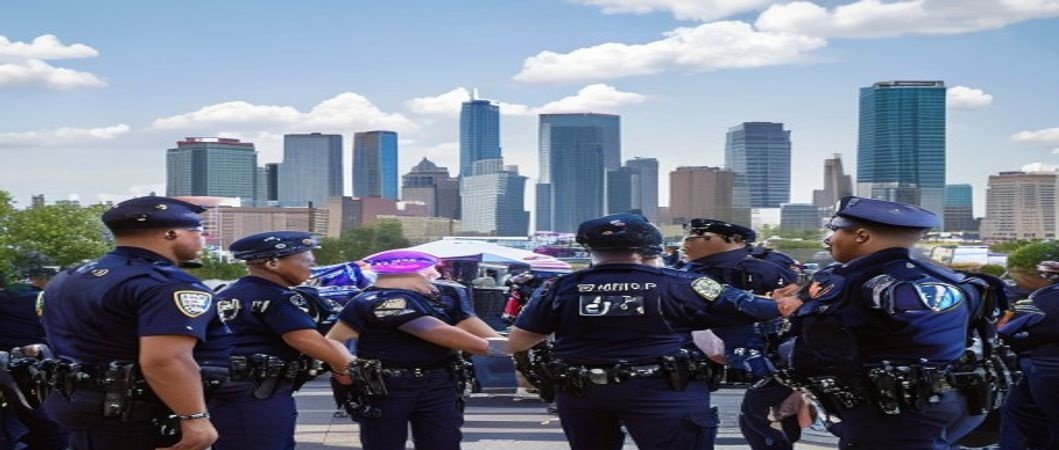
In recent years, the United States has witnessed a significant shift in the way police departments interact with their communities. As part of an effort to rebuild trust and promote transparency, many law enforcement agencies across the country have begun to adopt community-oriented policing strategies. These initiatives focus on fostering stronger relationships between police officers and the public, with the ultimate goal of creating safer and more cohesive neighborhoods. By engaging in open dialogue, hosting community events, and providing educational programs, police departments aim to break down barriers and address the concerns of local residents.
One notable example of this trend can be seen in the city of Chicago, where the police department has launched a comprehensive community policing program. The initiative includes regular town hall meetings, where residents can voice their concerns and provide feedback on policing practices. Additionally, the department has established a network of community centers, offering youth programs, job training, and social services to support at-risk individuals. Similar programs are being implemented in other major cities, including New York, Los Angeles, and Houston, with promising results. According to recent studies, community-oriented policing has led to significant reductions in crime rates and improvements in public perceptions of law enforcement.
As the US continues to navigate complex social and economic issues, the role of police departments in building and maintaining community trust is more critical than ever. By embracing innovative and inclusive strategies, law enforcement agencies can help to create a safer, more equitable society for all. As the nation looks to the future, it is likely that community-oriented policing will remain a key priority for police departments, with a focus on collaboration, empathy, and mutual understanding. With the ongoing evolution of policing practices, it will be essential to monitor progress and continue to adapt to the needs of diverse communities across the US.